
The Epstein Files were supposed to be a revelation.
A ledger of the powerful written in ink, not whispers.
Promises were made. Promises were repeated.
They claimed the truth would come out.
The fog would lift.
Transparency was the campaign slogan.
Then the files arrived.
And almost everything was blank.
Pages upon pages covered in black boxes.
Names, conversations, details, gone.
Block after block of censorship.
Critics call it about 90 percent redacted.
That is not release.
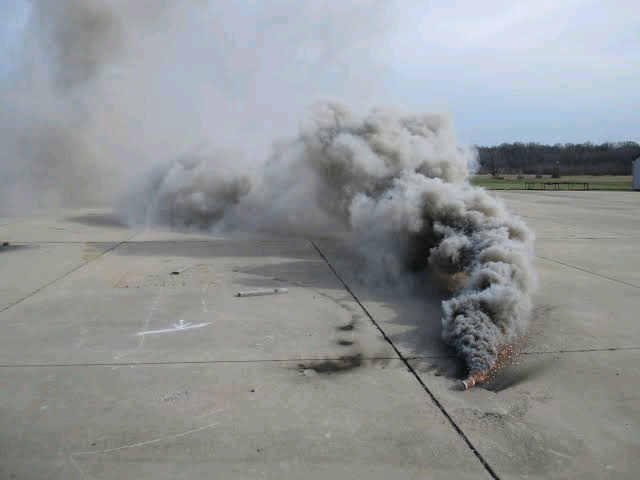
That is a smoke screen.
You promised to tear open the vault.
You signed a law that demanded disclosure.
You said there was nothing to hide.
But the public sees mostly shadows.
Half a loaf of content with most of the bread turned to ash.
People expected names.
They expected answers.
They expected the powerful held accountable.
Instead they got black boxes and excuses.
Officials say it’s about protecting victims.
Which is a sentence people nod at politely.
Until they notice that almost every page looks like a ransom note.
Some files disappeared entirely after being posted.
Photos of powerful people vanished, only to be restored later with shrugs about precautions.
Redaction is supposed to protect identity.
But when the document is mostly black, what is left?
A suggestion of secrecy that feels thicker than the truth.
This is how smoke screens work.
You promise clarity.
You deliver obscurity.
You point at a few crumbs and declare victory.
And the crowd argues over the crumbs while the kitchen burns.
Are you enjoying reading this post? Receive Notifications via email when new articles are published
And then there’s the curious silence about what was expected.
Some people believed there would be a “list.”
A catalogue of names that would redefine power.
That was the campaign promise.
But the files have no such list.
Just hints at connections, moments in photos, references without context.
Almost nothing that exposes wrongdoing, just enough to leave suspicion hanging like smoke in a room with no windows.
If there was nothing to hide, the argument goes, then why hide it?
It’s a question that lands flat, like a joke no one laughs at.
Officials say the redactions are legal necessities.
They say they follow court orders and protect ongoing processes.
But the result is a public spectacle that feels like a private show.
A parade of black lines guarded by careful language.
A confession without confession.
Some people said the files would end careers.
Some said they’d bring justice.
Some thought a simple list would dismantle illusions of untouchability.
Instead the files look like a monument built to impression.
Not truth.
Just the idea of truth.
And of course, the political theatre continues.
Every side blames the other for selective release.
Accusations fly about coaching responses, about concealment, about legal obligations.
The spectacle distracts from the blank pages.
The audience debates the puppeteers while the strings remain unseen.
A photo of a prominent figure was posted, then removed, then restored.
The choreography is elegant.
Confusion is meticulous.
Clarity is nowhere in sight.
Here’s the simplest truth in all of this:
Smoke screens are successful when no one notices the absence of fire.
When people argue about the shape of the smoke instead of asking where it came from.
When the promise of exposure becomes the distraction from exposure itself.
The Epstein Files are less a revelation than a suggestion.
A murky mirror held up to power with most of the image erased.
The public was sold transparency.
What we got was opacity with flair.
And the smoke keeps rising.
Did you enjoy reading this post? Receive Notifications via email when new articles are published
Latest Articles
- South Africa Will Be Next After IranIsrael has already indicated through a blog that appeared in the Times of Israel on 2 January 2026, largely ignored by African media, that it would like to see Africa further fragmented, beginning with South Africa. With a US base in Botswana, South Africa probably has very little chance of countering any combined US-Israeli aggression. Its internal divisions are deep, especially along racial lines. White …
- The Cape Of Good Hope Is Open For BusinessInternational shipping groups including Maersk announced on 1 March that they were rerouting vessels bound for the Red Sea via southern Africa. The Cape of Good Hope. That stretch of ocean at the bottom of this continent, the one the Portuguese named and the world has mostly ignored since the Suez Canal opened in 1869, is suddenly the world’s most important shipping detour. When the …
- Burkina Faso, Burundi, DRC, Liberia, MozambiqueBased on factors including fiscal balance, petroleum import reliance, poverty and national wealth, Janes assesses Burkina Faso, Burundi, Central African Republic, the Democratic Republic of Congo, Liberia, and Mozambique to be particularly vulnerable given acute fiscal fragility and high energy vulnerability. The band are the names of the countries on the list of most exposed to the economic fallout of a war they had nothing …
- Nine Countries Cut Interest Rates Before The Bombs DroppedNine African countries including Nigeria, Kenya, Egypt and the Democratic Republic of Congo earlier this year cut interest rates, citing lower inflation, high foreign demand for their local-currency denominated bonds and current account surpluses. Nine countries. Months of careful fiscal management. Coordinated monetary policy. The quiet, unglamorous work of keeping economies stable enough to grow. Then on February 28th the bombs started falling on Tehran …
- The Price At The Pump In MaronderaZimbabwe’s fuel price was $1.54 per litre in November 2025. That was before Brent crude was $61 a barrel. Brent is now above $100 and steadily climbing. Now petrol per litre is USD 2.08. A prolonged conflict or at the Strait of Hormuz could see prices skyrocket toward $120 to $140 per barrel. Zimbabwe’s fuel pricing framework adds government levies, the Strategic Reserve Levy, carbon …
- Since We Are Already Amending, Let’s Dump The Dumb Shit In Our ConstitutionZimbabwe is amending its constitution. Parliament has confirmed it and governing party ZANU-PF has the numbers to make it happen. The public hearings on this issue lasted less than a week across a country of 15 million people, which works out to roughly one hour of democracy per province if you are being generous with the arithmetic. We are doing this since the amendment is …
- Zimbabwe’s CAB3 Will Make A Treasonous Coup Way More Easier If PassedZimbabwe has always had a gift for doing things no one thought to put in the rulebook. We invented the “constitutional coup” before anyone else thought the phrase made grammatical sense. In November 2017 the military rolled tanks to the national broadcaster, a general read a statement off a sheet of paper and, Robert Mugabe was gone by morning. Nobody called it what it was …
- When The Boss Needs Someone To BlameWhy Did Trump Fire Pam Bondi And Throw Caroline Leavitt Under The Bus? There is a pattern in how Donald Trump manages people, and it has nothing to do with performance. It has everything to do with polls. On March 31, standing in the Oval Office, Trump complained to reporters that he was receiving “93% bad publicity.” Rather than consider that the publicity might reflect …
- The Rising Ledger Volume III: At The Brink of World War 3 Issues #51 to #65Issue #51: The Strait Is The Global Food Chain One-fifth of globally traded oil moved1 through the Strait of Hormuz every day. Twenty-two percent of global LNG. Qatar’s Ras Laffan facility which is the source of roughly 20 percent of global LNG exports was struck by Iranian drones and shut down production at the start of the 2026 Iran War. Marine insurance premiums are still …
- The Nuclear Surveillance Architecture is GoneArms control doesn’t just mean treaties. It means inspections. Verification. Satellites watching missile silos. Inspectors counting warheads. Communication channels between adversaries so that a radar malfunction doesn’t get interpreted as an incoming strike. The 1983 Soviet satellite false alarm nearly ended the world. A Soviet officer named Stanislav Petrov chose not to report what his instruments showed as an incoming American first strike, and he …
- India and Pakistan fired Missiles at each otherIn May 2025 — approx ten months ago — India and Pakistan, both nuclear-armed states, engaged in four days of open conflict involving cross-border drone and missile attacks. The Bulletin of the Atomic Scientists described it as “nuclear brinkmanship.” Two countries with a combined nuclear arsenal of roughly 300 warheads exchanged live fire for four days and the world did not end. The crisis de-escalated. …

 Zealous Thierry