

If you were to trace the arc of U.S.–Venezuela relations, the current drama unfolding over the Caribbean skies does not appear as an isolated provocation. It resembles the final bead on a long, heavy necklace of misunderstandings, miscalculations, and ambitions stretching back more than a century. The decision by former President Donald J. Trump in yesterday to declare Venezuelan airspace “closed” may be dramatic, but it is also profoundly familiar in the long history of Washington’s entanglements with nations whose strategic value has been measured in barrels, borders, and ideology.
To understand the present moment, you must begin at the point when the United States first recognized Venezuela as more than a distant republic. That moment, like so many others in early 20th-century hemispheric politics, was written in crude oil.
The Oil Century: 1920s–1950s
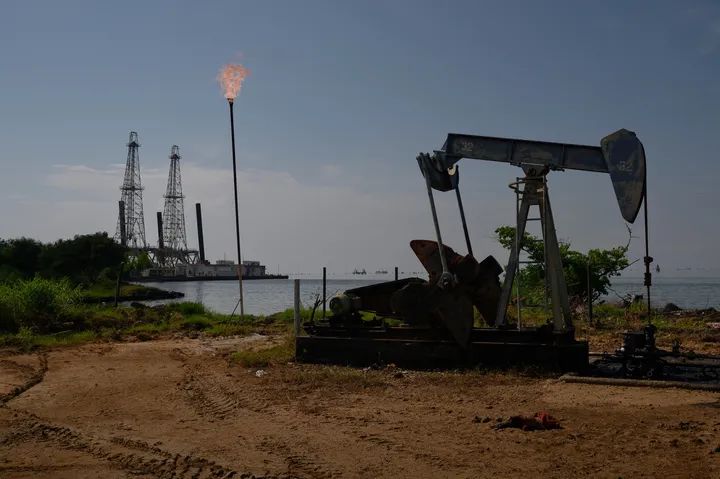
Venezuela’s transformation from a relatively quiet agricultural nation into one of the world’s largest petroleum exporters occurred almost overnight. When commercial oil production began in earnest in 1914 at the Zumaque I well in Lake Maracaibo, it set in motion a geopolitical shift too large for Washington to ignore. By the 1920s, American oil companies – Standard Oil of New Jersey, Gulf Oil, and others – had secured dominant stakes in Venezuelan concessions, embedding U.S. economic interests deep into the country’s political bloodstream.
This early period shaped Washington’s view of Venezuela: an energy supplier, strategically close, and politically malleable. The U.S. provided diplomatic recognition and military cooperation to Venezuelan strongmen so long as oil flowed predictably and cheaply.
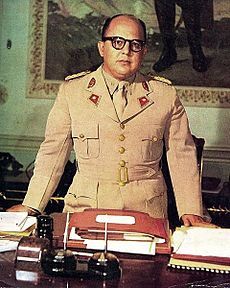
When General Marcos Pérez Jiménez consolidated his dictatorship in the 1950s, he enjoyed quiet American support, not because of ideological alignment, but because he maintained stability in the oil sector during the early Cold War.
In the minds of American policymakers, Venezuela was becoming something specific: a reliable, if authoritarian, pillar of regional order. This framing would later become fatally outdated.
Democracy and the Illusion of Alignment: 1958–1998
When Pérez Jiménez fell in 1958, Venezuela entered a celebrated democratic era often called the Puntofijo period. Washington applauded the transition, eager to see a stable, pro-American democracy flourish in the hemisphere. For decades, Venezuela seemed unusually resilient – a counterexample to the coups, civil wars, and dictatorships that consumed much of Latin America in the latter half of the 20th century.
Yet beneath the surface, society was fracturing. Oil wealth insulated the political elite from the daily realities of average citizens. Economic prosperity masked structural inequalities. The United States remained largely blind to these tensions, partly because the bilateral relationship functioned smoothly. Venezuela provided oil and votes at the Organization of American States; Washington provided diplomatic warmth.
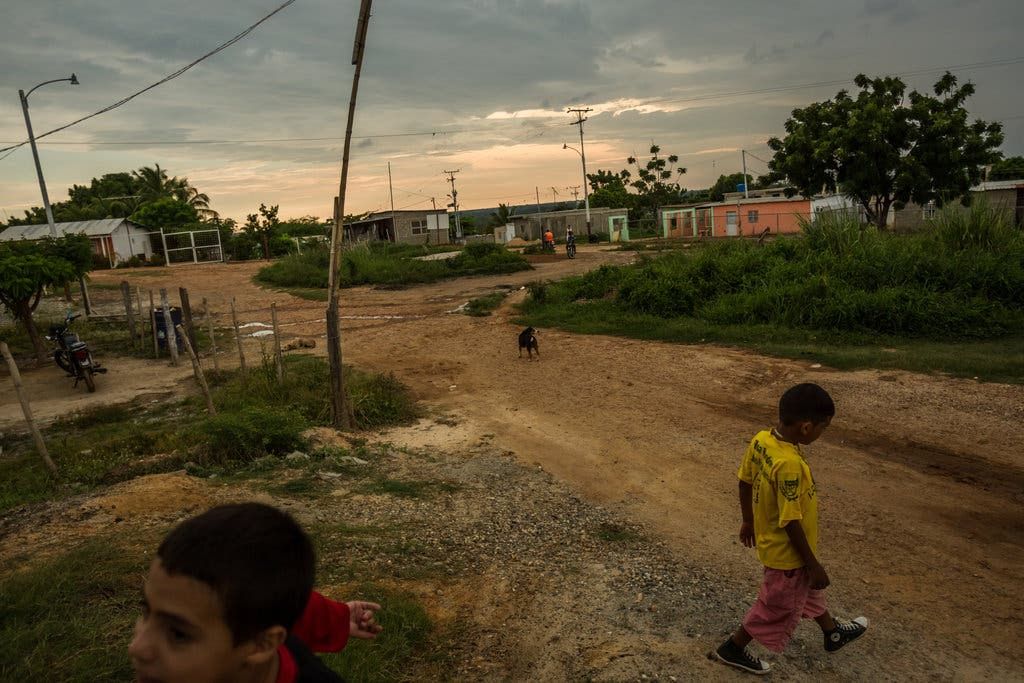
This era created another American misconception: that the political status quo was permanent. But democracies built on extractive economies often age poorly. By the 1990s, corruption scandals, collapsing oil prices, and widespread disillusionment created a vacuum – and a former paratrooper named Hugo Chávez stepped into it.
The Chávez Disruption: 1998–2013
When Hugo Chávez won the presidency in 1998, Washington underestimated him profoundly. U.S. officials saw another populist who would eventually moderate once in power. They misread his ideology, his mandate, and especially the depth of Venezuelan frustration with the old political class.
Chávez did not moderate. He remade the constitution, centralized power, and pursued a foreign policy that explicitly challenged U.S. influence. His government deepened ties with Cuba, courted China, and aligned with Iran. He nationalized key industries, including oil. To Washington, this was nothing short of a strategic rupture.
The relationship deteriorated rapidly. In April 2002, when Chávez was briefly ousted by dissident officers, the Bush administration appeared strikingly quick to embrace the coup leaders. The move backfired; Chávez was restored within 48 hours by massive public mobilization, and he emerged more suspicious of Washington than ever.
Chávez weaponized the history of U.S. interventions in Latin America, and Washington’s missteps furnished him with ample rhetorical ammunition. Each exchange hardened mutual distrust. By the time he died in 2013, the bipartisan consensus in Washington regarded Venezuela as a hostile state aligned with rival powers.
Maduro, Protest, and the Sanctions Machine: 2013–2017
Nicolás Maduro inherited a polarized country amid economic collapse. Falling oil prices exposed the unsustainability of Venezuela’s oil-dependent system. Corruption deepened. Protests erupted. The United States framed the crisis through a familiar lens: human rights, democracy, and regional stability.
But policy tools remained narrow. Sanctions expanded gradually, beginning with individual officials and later targeting the state oil company PDVSA. Each new measure reinforced Venezuela’s economic isolation. Washington believed pressure would force political concessions; Caracas believed concessions would invite regime change.
By the mid-2010s, the relationship resembled a Cold War microcosm: one side defending sovereignty, the other defending democracy, both speaking past each other.
Are you enjoying reading this post? Receive Notifications via email when new articles are published
The Guaidó Experiment and the Limits of American Influence: 2019–2020
The arrival of Juan Guaidó in January 2019 marked the most ambitious U.S. attempt at political engineering in Venezuela since the Cold War. Backed by the United States and dozens of other nations, Guaidó declared himself interim president, invoking constitutional provisions that his allies argued justified his claim.
Washington embraced this strategy with remarkable confidence. The Trump administration signalled that Maduro’s days were numbered. But Maduro remained in power, the military stayed loyal, and Guaidó’s movement peaked without achieving its goal.
The U.S. response escalated to a new doctrinal level. Federal prosecutors indicted Maduro on drug-trafficking charges. The Navy increased patrols near Venezuela. Harsh sanctions crippled the oil industry further. Official statements grew more militarized.
The United States had drifted from diplomacy to pressure, from pressure to threats, and from threats to symbolic demonstrations of force. The pattern mattered. It created the preconditions for the confrontation unfolding today.
The Strategic Realignment: 2020s
While U.S. policymakers framed Venezuela as an ideological adversary, Caracas deepened its partnerships with countries eager to limit American influence. China financed infrastructure and secured oil futures. Russia provided military training and equipment. Iran built trade routes that bypassed sanctions. These relationships altered Venezuela’s global position.
Washington remained focused on domestic Venezuela policy – elections, protests, sanctions – while the country itself was becoming part of a broader geopolitical alignment. By the early 2020s, Venezuela’s foreign policy was shaped as much by Beijing and Moscow as by Caracas.
This shift matters because it transformed Venezuela from a domestic crisis the U.S. hoped to resolve into a strategic space contested by rival powers. When strategic space is contested, crises escalate faster.
The Airspace Shock: 2025
So when Donald Trump declared in late 2025 that “the airspace above and around Venezuela should be considered closed in its entirety,” it did not land as an isolated outburst. It fit neatly into a long historical rhythm: assertiveness, misreading, escalation.
Viewed through international law, the statement has no enforceable mechanism. A nation controls its own airspace; no foreign government can legally declare it closed. But geopolitics often operates outside legal architecture. The declaration is a warning, and an attempt to reshape the strategic environment.
For Venezuela, the move is a violation of sovereignty and an echo of past U.S. intrusions. For Washington, it’s a message aimed at illicit trafficking networks, adversarial states, and perhaps domestic political audiences.
The danger lies not in the statement itself but in the responses it may trigger. When nations with long histories of mistrust exchange threats, miscalculations become easier than restraint.
Why the Standoff Matters
The 2025 airspace declaration is not a precursor to a full-scale invasion. The U.S. has neither the political appetite nor the regional consensus for such an operation. But the risk of incremental escalation is real. A misidentified aircraft, a naval encounter, a radar mistake – these are the small events that can spiral when distrust saturates every diplomatic channel.
Venezuela, meanwhile, has framed itself as a sovereign state resisting external pressure, and every American threat reinforces that posture. It is a cycle as old as U.S.-Latin America relations: pressure solidifies resistance, resistance invites more pressure.
What Comes Next?
There are three plausible directions for the relationship after the airspace declaration:
1. Managed Confrontation
Both sides maintain hostile rhetoric but avoid kinetic actions. This is the most likely path, given the high cost of military conflict.
2. Escalated Signaling
Increased U.S. naval patrols, additional sanctions, and more assertive Venezuelan alignments with Russia or Iran. This is already happening.
3. Crisis Through Accident
The least predictable but most dangerous scenario. A misunderstanding in contested airspace could force rapid decisions neither side can easily reverse.
What is unlikely is a return to normalcy. The relationship has accumulated too much history, too much ideology, and too much mistrust to simply reset.
The Long View
The story of U.S.–Venezuela relations is, at its core, a story of mismatched expectations. Washington viewed Venezuela through strategic utility; Venezuelans viewed Washington through historical memory. Venezuelan nationalism collided with American exceptionalism, and the result was a century-long drift from cooperation to confrontation.
The closing of the skies in 2025 is not an end. It is a culmination – and perhaps a turning point. The next chapter will depend on whether both nations can step back from a pattern that history has rehearsed too many times.
For now, the skies remain contested, the sea lanes crowded, and the rhetoric sharp. And the long, uneasy relationship between the United States and Venezuela continues, shaped as much by the past as by the unpredictable horizon ahead.
Did you enjoy reading this post? Receive Notifications via email when new articles are published
Latest Articles
- Building The United States’ Golden Dome Missile Defense System And How To Start A Space WarIn May 2025, the world got a first-hand look at what a modern missile defense system looks like during a major international conflict, when Israel attacked Iran and triggered a rapid retaliation. What most people saw was a piece of Israeli Missile Defense system referred to as the Iron Dome. But that name hides a more complicated reality. The Iron Dome is only the lowest …
- IshowSpeed coming to ZimbabweMarondera – Darren Jason Watkins Jr., the American internet personality better known as IShowSpeed, is expected to visit Zimbabwe as part of an ambitious tour spanning 20 African countries, a move that signals a growing shift in how global digital culture engages with the continent. Watkins, just 20 years old, has become one of the most influential livestreamers of his generation, commanding tens of millions …
- Us vs ThemThere’s no “us.” There’s no “them.” There’s only the comfort of pretending there is. People need enemies the way lungs need air. Conflict gives meaning to the meaningless.Without opposition, identity collapses. So we build one. We draw lines on maps, then forget who drew them. Every tribe begins as fear, then calls itself culture.We love belonging because it saves us from thinking.It’s easier to chant …
- We Turned Horniness Into An IndustryLet me explain this slowly, because if you blinked for five minutes in June, you might’ve missed the moment humanity officially gave up pretending it had standards. An actress, Sydney Sweeney, famous, attractive, very online-adjacent, partnered with a men’s grooming company called Dr Squatch to release a limited-edition bar of soap. Five thousand bars. Eight dollars each. And the marketing hook, the thing that made …
- Smoke ScreensThe Epstein Files were supposed to be a revelation.A ledger of the powerful written in ink, not whispers.Promises were made. Promises were repeated.They claimed the truth would come out.The fog would lift.Transparency was the campaign slogan. Then the files arrived.And almost everything was blank.Pages upon pages covered in black boxes.Names, conversations, details, gone.Block after block of censorship.Critics call it about 90 percent redacted. That is …
- The Redacted States Of AmericaThey finally released the Epstein files. And by “released,” I mean they handed the public a stack of black rectangles wrapped in patriotic bullshit and said, ‘here you go, transparency.’ Not truth, mind you. Not accountability either. Transparency cosplay. The kind where the light technically passes through, but you still can’t see a fucking thing. Page after page after page looks like it lost a …
- We Cant Have Shit AnymoreSomewhere out there, a very tired underpaid FBI agent had to write a sentence that would’ve sounded insane just ten years ago. “Criminals may use AI-generated images to fake kidnappings and demand ransom.” That sentence alone should qualify us for a species-wide timeout. And of course the internet did what the internet does and immediately joked about how this will disrupt the real kidnapping industry. …
- Africa is The New Cold War FrontYou ever feel like the whole damn planet suddenly remembered Africa exists. Not because they actually give a shit about Africans, but because the minerals are running low everywhere else and China has been scooping up the continent like it’s a Black Friday sale? Because that’s exactly what’s happening. And now, out of nowhere, every global superpower is acting like they’ve always loved us, like …
- My Unorthodox Thoughts On The US-Zimbabwe Partnership ResetOh look! America and Zimbabwe are “starting fresh.” Again. For the 900th time. The U.S. has now discovered that Zimbabwe could be “a great partner.” No shit, Sherlock. Anyone can be a great partner as long as they have lithium, gold, and a government desperate enough to smile at whoever shows up with a business card. And the Herald is acting like this is the …
- The World Didn’t Sign Up To Be America’s Captive Audience (But Here We Are)Sometimes I look at my social media feed and wonder when exactly I became an unpaid U.S. political analyst, commentator or whatever. I live thousands of kilometers away, my taxes don’t go there, I don’t vote there, and yet every day I’m force-fed a steady diet of American political drama like it’s my emotional multivitamin. I open TikTok: screaming match between a congressman and a …
- America’s Love Affair With “The End Of The World”Some days I think the United States doesn’t actually want to fix anything. I think the country is addicted to decline the same way some people are addicted to astrology. I think that’s bcause it’s easier to believe Mercury is in retrograde than to admit you forgot to pay your bills. Everyone is screaming about apocalypse like it’s a sport. Right-wing apocalypse, left-wing apocalypse, climate …

 Zealous Thierry