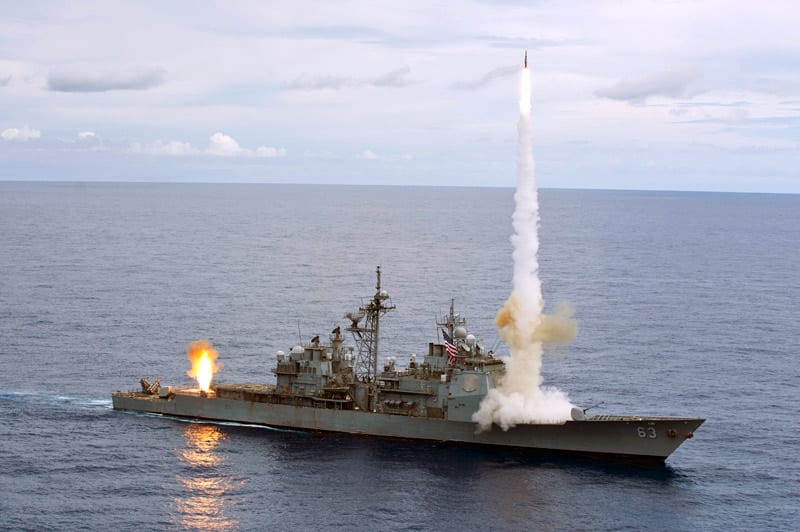

In May 2025, the world got a first-hand look at what a modern missile defense system looks like during a major international conflict, when Israel attacked Iran and triggered a rapid retaliation. What most people saw was a piece of Israeli Missile Defense system referred to as the Iron Dome. But that name hides a more complicated reality.
The Iron Dome is only the lowest and cheapest layer of Israel’s missile defense network. It consists of roughly ten batteries, each costing about $100 million, with individual interceptor missiles priced around $40,000. That is remarkably inexpensive by military standards, especially when compared to the United States’ Patriot system, where a single interceptor can cost close to $4 million.
Recently, the United States has begun discussing a similar concept, even borrowing the branding, calling its proposed system the Golden Dome. But this comparison immediately breaks down once you look at the threats each system is meant to stop.

This is a Qassam rocket, the most common rocket fired out of Gaza. It is small and often built using sugar and potassium nitrate fertilizer. It costs roughly $800 to make and can travel about 16 kilometers unguided.
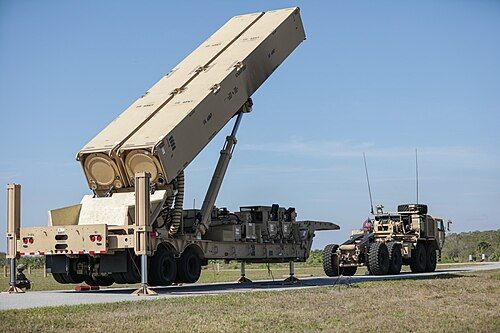
Now compare that to a hypersonic glide vehicle.
One is built under extreme scarcity by people living under siege, designed to fly blindly for a short distance before crashing down. The other can be launched from nearly anywhere on Earth, reach the edge of space, guide itself back into the atmosphere, maneuver at hypersonic speeds, evade defenses, and strike a target with extraordinary accuracy halfway across the planet.
Designing a system capable of stopping the first does very little to prepare you to stop the second.
The cost difference reflects this gap. The Iron Dome’s expense would be trivial compared to a system meant to defend against intercontinental ballistic missiles, hypersonic weapons, and advanced cruise missiles. Which raises a deeper question: why does the United States need such a system at all?
The U.S. has never had to defend its homeland from large-scale missile attacks. Yet the Golden Dome proposal aims to do exactly that, at an enormous price for that matter. The system is expected to counter ballistic missiles, hypersonic glide vehicles, and cruise missiles, with cost estimates ranging from $161 billion to $542 billion over 20 years. For context, that’s the equivalent of six to twenty-seven years of NASA’s entire operating budget.
So how do systems like this actually work?
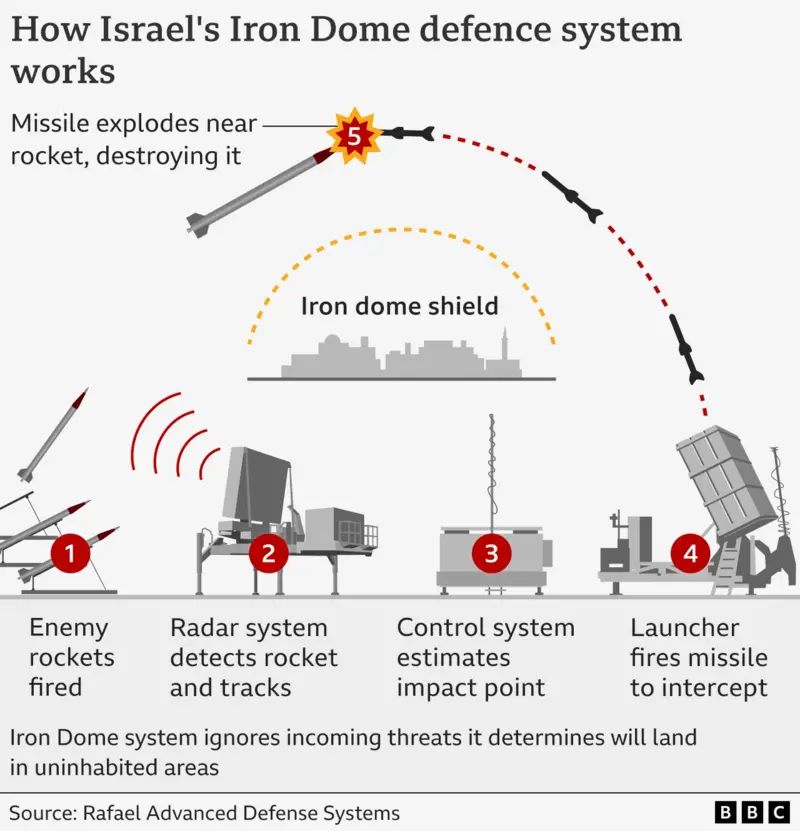
The Iron Dome was designed to intercept short-range rockets and artillery. At its core is a mobile radar that detects and tracks incoming threats. Once a rocket is detected, data is sent to a battle management unit that calculates its trajectory. If the system determines the rocket will hit a populated area or critical infrastructure, it launches a Tamir interceptor, which guides itself using ground radar and onboard optical sensors.
But calling the entire system the Iron Dome is misleading. It is only one layer of a broader defense network.
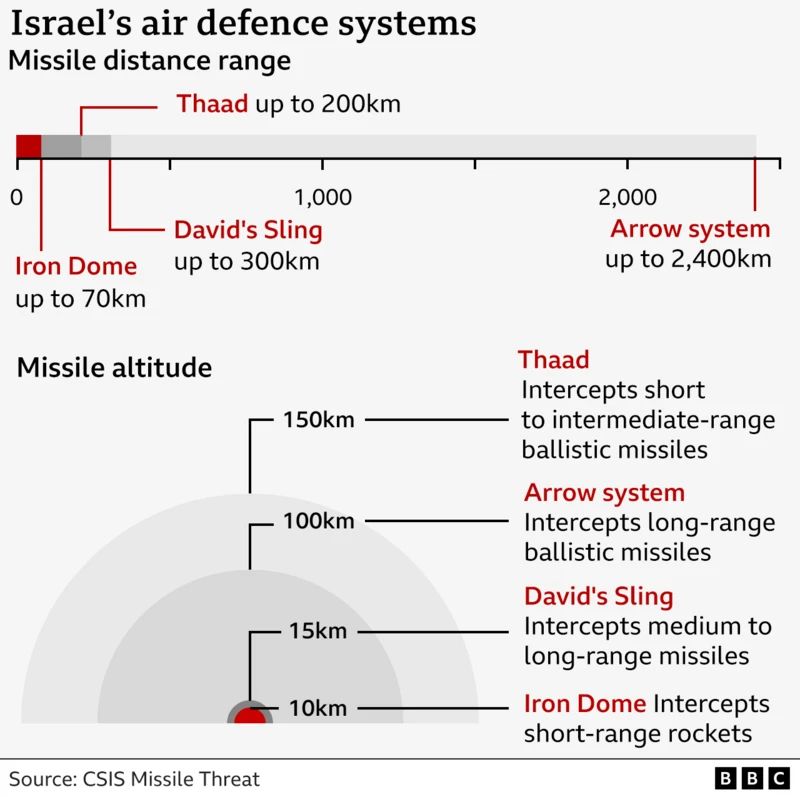
Above it sits David’s Sling, which handles medium-range threats, and above that the Arrow system, designed to intercept long-range, high-altitude ballistic missiles. It is this Arrow system that was under intense strain as Iran retaliated, with some missiles getting through as interceptor stocks ran low.
Reports suggest Israel was spending as much as $285 million per day to keep the system running, with Arrow interceptors costing roughly $3 million each.
One of Iran’s newer missiles, the Fatah, is described as a hypersonic ballistic missile, but that label is overstated. While the missile does reach hypersonic speeds during re-entry, so do most ballistic missiles. True hypersonic weapons are defined by their ability to maneuver unpredictably at low altitude. The Fatah follows a high ballistic arc and can maneuver only slightly.
The real threat isn’t cutting-edge maneuverability. It’s numbers.
Iran’s strategy relies on saturation: launching hundreds of missiles at once, alongside waves of cheap drones that clutter radar systems and drain interceptor supplies. Even the most advanced defenses struggle when overwhelmed.
Meanwhile Israel benefits from geography. It is defending a small country where cities are clustered close together. The United States faces a far more complex problem. Any attack would likely involve intercontinental ballistic missiles, submarine-launched weapons, cruise missiles, and increasingly sophisticated hypersonic systems.
The Golden Dome executive order outlines an ambitious response. Rather than a single defensive wall, it proposes multiple overlapping layers to protect the continental United States. Some elements involve upgrading existing systems and integrating them into a unified command structure. Others introduce controversial ideas that could reshape U.S. missile defense for decades.
To understand the challenge, it helps to break a missile’s flight into three phases.
First is the boost phase, lasting only a few minutes while the missile’s engines are firing.
Then comes the midcourse phase, where the missile travels through space. This is the longest and most complex stage, as missiles may deploy decoys, release multiple warheads, or maneuver unpredictably. Defense systems must determine which objects are real threats.
Finally comes the terminal phase, when warheads plunge back into the atmosphere at extreme speeds. At this point, defenders have only seconds to react.
Everything begins with detection. Missile launches produce intense heat during the boost phase. These are visible to infrared sensors in space. This task falls to the U.S. Space Force’s space-based infrared satellite network, which provides persistent global coverage.
Once detected, the missile must be tracked in real time. Tracking relies on a mix of space-based sensors and ground-based radar systems that monitor speed, altitude, and direction. One of the most important of these is the Long-Range Discrimination Radar in Alaska, positioned to monitor potential attack paths.
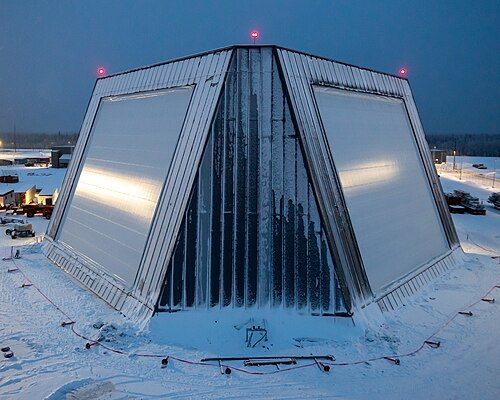
This phased-array radar uses thousands of small antennas to steer its beam electronically, allowing it to track multiple objects at once or focus into a single high-resolution beam. Built using gallium nitride, it can operate at higher power levels while efficiently dissipating heat. This allows it to switch between lower frequencies for long-range tracking and higher frequencies for detailed discrimination. This is especially critical when missiles deploy decoys as simple as nuts and bolts.
This radar is just one part of a global sensor network, which also includes sea-based platforms and airborne systems.
Once a missile is tracked, the final step is interception. Most modern interceptors rely on kinetic energy, not explosives. Explosions risk detonating the warhead itself and are less effective at high altitude. Instead, interceptors aim to physically shatter the warhead at hypersonic speeds.
To do this, interceptors must also see their targets. Older systems used spinning optical disks to center on infrared signatures. Modern systems use advanced infrared detector arrays made from materials like indium antimonide, producing thermal images that allow precise guidance.
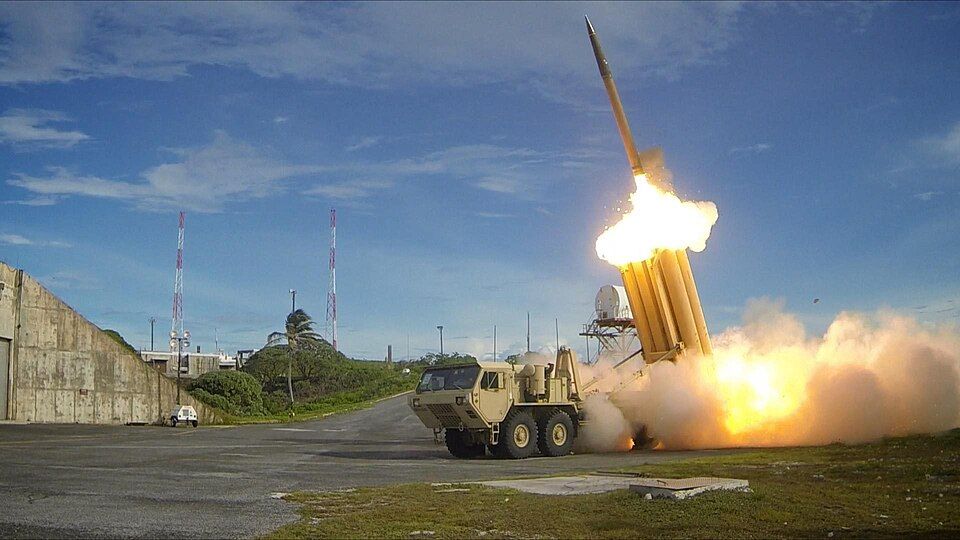
All of this can be integrated into systems like Aegis, deployed on U.S. Navy ships, and its land-based counterpart THAAD. These systems share data across a global digital battlefield map, incorporating information from satellites, aircraft, and radar. Even F-35 pilots can see this data through augmented-reality helmets.

Are you enjoying reading this post? Receive Notifications via email when new articles are published
The United States already has a robust missile defense network. What the Golden Dome seeks to do is dramatically expand its coverage, especially against counter-value threats. These refer to attacks aimed at cities and civilian infrastructure rather than military targets.
This marks a shift in priorities. Instead of protecting military assets, the focus moves toward defending specific population centers. That raises difficult questions.
Which cities get covered?
By what criteria? Population size? Economic value?
At some point, missile defense systems may quietly appear around select cities, leaving others exposed.
Where the Golden Dome becomes truly controversial is its emphasis on stopping missiles before or during the boost phase. To do that globally would require weapons in space.
The only realistic way to intercept missiles during boost phase anywhere on Earth is a constellation of space-based interceptors in low Earth orbit. This idea isn’t new. Reagan proposed similar concepts during the Cold War, including Brilliant Pebbles and Rods from God also known as kinetic bombardment but it wasn’t initiated fully due to funding. The system would need over 2000 satellites in space. What’s changed now is launch cost. Thousands of satellites are now feasible—Starlink has already proven that by putting over 7000 satellites in space.
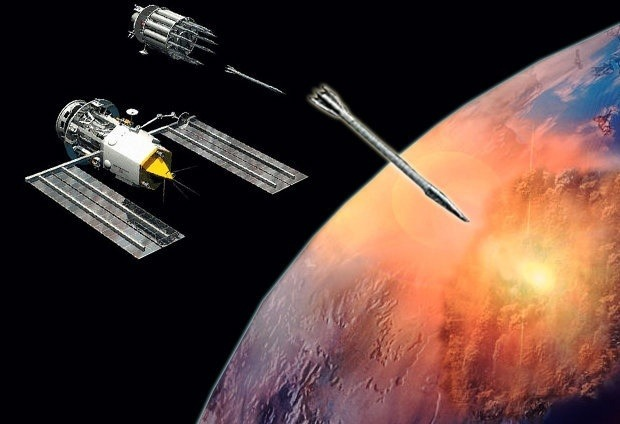
But interceptor satellites would be far more complex, expensive, and politically explosive. Weapons in space would likely provoke international backlash and invite retaliation, especially from nations with anti-satellite capabilities.
An alternative may be space-based lasers. Lasers can engage targets at the speed of light, heating and disabling missiles during boost phase. The U.S. has already demonstrated this capability with an airborne laser mounted on a Boeing 747.

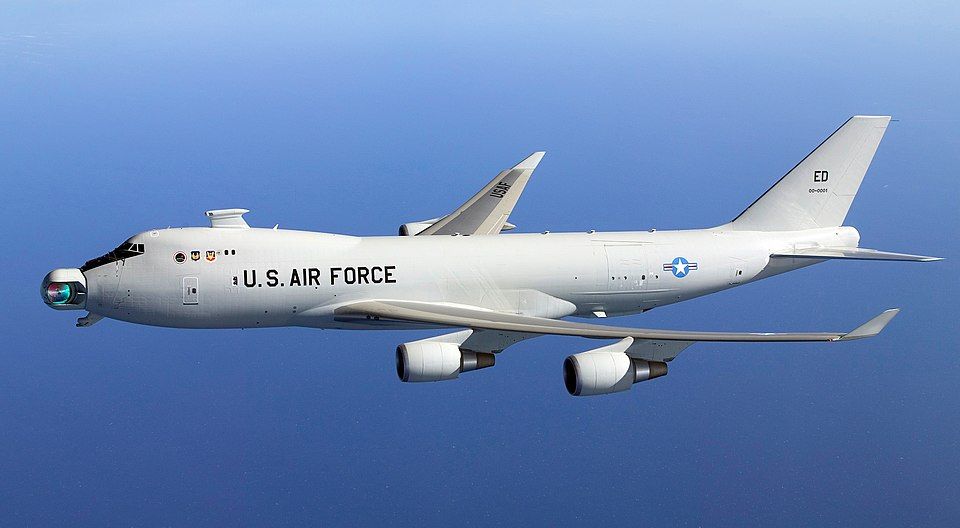
The challenge is power. Space-based lasers would require enormous energy. Basically hundreds of kilowatts to megawatts. That would demand massive orbital power infrastructure, potentially involving power-beaming satellites in higher orbits. Technically possible, but politically and economically fraught.
Experts remain skeptical. Cost estimates continue to rise, with projections exceeding $542 billion over two decades. Funding remains uncertain, geopolitical risks are high, and adversaries have already warned the system could trigger an arms race in space.
In trying to defend against a future that may never come, the Golden Dome risks creating the very instability it claims to prevent.
Did you enjoy reading this post? Receive Notifications via email when new articles are published
Latest Articles
- The Long GameHere’s the cold, rational truth. Even if this works, even if the Iranian regime collapses, even if some moderate government rises from the wreckage, even if not one more American dies, the Trump Administration will have established that the United States assassinates foreign heads of state without congressional approval, that international law means nothing when America decide it’s inconvenient, that diplomatic negotiations can be abandoned …
- Six American soldiers are dead in the #USIranWar The US military confirmed that its death toll from the conflict has risen to six, after two bodies were recovered from a regional facility struck by Iran. Six. With more promised. Trump himself said there will be more casualties. He said it like a weather forecast. “There will likely be rain on Tuesday. There will likely be more American deaths.” Six families were destroyed. Six …
- The Insurance Companies May Have Ended The #USIranWarHere’s the most surreal part of all of this: Iran didn’t even need to physically close the Strait of Hormuz. Iran has deployed selective drone and rocket attacks. That’s been enough for shipping companies and the insurers who underwrite them to balk at the risk of sending ships through the strait. The insurance companies said no. That was it. Fifteen hundred years of naval strategy, …
- The Sanctions Came FirstThis war didn’t start on February 28. The strikes follow the failure of recent indirect talks between the US and Iran in early February 2026. The talks themselves followed the October 2025 triggering of the snapback sanctions against Iran under the 2015 nuclear deal by the UK, Germany and France. Together, sanctions, failed talks and airstrikes form a sequence. A chain. Every link was a …
- What Does Regime change Actually Mean?Trump said regime change on day one. Then he walked it back. Then it came back. Trump’s goals for the war have shifted from regime change to stopping Iran from developing nuclear capabilities to crippling its navy and missile programs. In five days! The goal of the war changed three times in five days! It looks like man making it up as he goes with …
- The MAGA coalition is CrackingTrump’s MAGA coalition is splintering over what it sees as the president’s failure to keep his “America First” campaign promise by leading the U.S. toward an overseas war to protect his pupeteers, Israel. The base that chanted “no more wars” is watching their guy start one. Without Congress and without a plan, not even a coherent explanation of what victory looks like. Some are staying …
- Diplomacy?The strikes follow the failure of recent indirect talks between the US and Iran on Iran’s nuclear programme in early February 2026. Early February, that’s three weeks before the bombs. Talks were happening and negotiations were underway. And then the bombs. On 25 February 2026, Iranian Foreign Minister Abbas Araghchi stated that a “historic” agreement with the United States was possible. Three days before the …
- The Veterans Know How This EndsRep. Seth Moulton, who served with the Marines during the United States’ second war in Iraq, said: “The two basic problems with Bush’s War in Iraq were that it was based on a lie and there was no plan for what comes next.” He served. He was there. He knows what the inside of one of these disasters looks like. And he’s watching the same …
- Hezbollah is WatchingOne question in coming days and weeks will be whether Iran will look to Hezbollah to be a part of that escalatory response, including against U.S. targets and targets inside Israel. Hezbollah has already launched rockets at Haifa. They haven’t gone all in yet. They’re calculating. Watching. Waiting to see how badly Iran bleeds before deciding whether to fully commit. Meanwhile, Israeli air attacks on …
- Russia Must He Loving Every Bit Of This As Putin Laughs All The Way To The BankThe greatest beneficiaries of the United States’ grave violations of international law are the very actors whom Washington would normally seek to restrain: Moscow will be emboldened to continue its barbaric assault on Ukraine, while China will feel vindicated. Russia gets higher oil prices. Russia gets a distracted America. Russia gets a weakened international legal order that it can point to and say, see, everyone …
- Over 150 Ships Are Stranded In The Strait As of March 1, 2026, approximately 170 containerships with a combined capacity of around 450,000 TEU, roughly 1.4 percent of the entire global container fleet, were inside the strait and unable to exit. These are ships full of grain, medicine, electronics, car parts, consumer goods. Sitting there. Going nowhere. Every day they sit is another day the global supply chain seizes up a little tighter. …

 Zealous Thierry