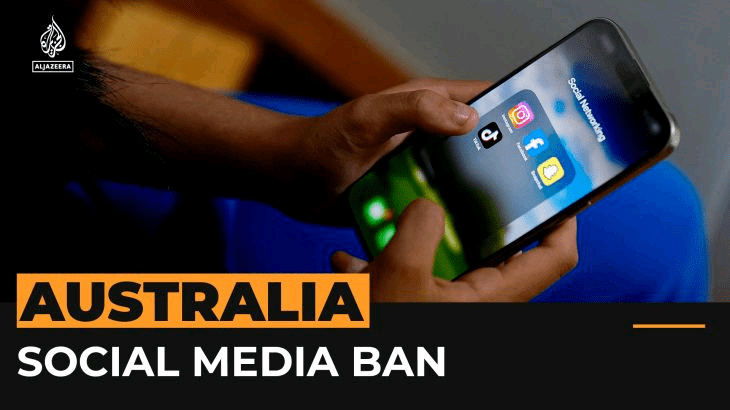

In December 2025, Australia will switch off the lights for anyone under sixteen trying to enter social media. Instagram, TikTok, Facebook, YouTube, Reddit, and the rest will be off-limits. Because the government has decided.
This is not a parental choice anymore. It is law. A platform that lets a fifteen-year-old slip through will face a fine of nearly fifty million Australian dollars. That is not regulation. That is punishment. That is an entire country taking a step into a new kind of control. A digital dictatorship disguised as child protection.
The story is old. Every government promises safety when it wants more power.
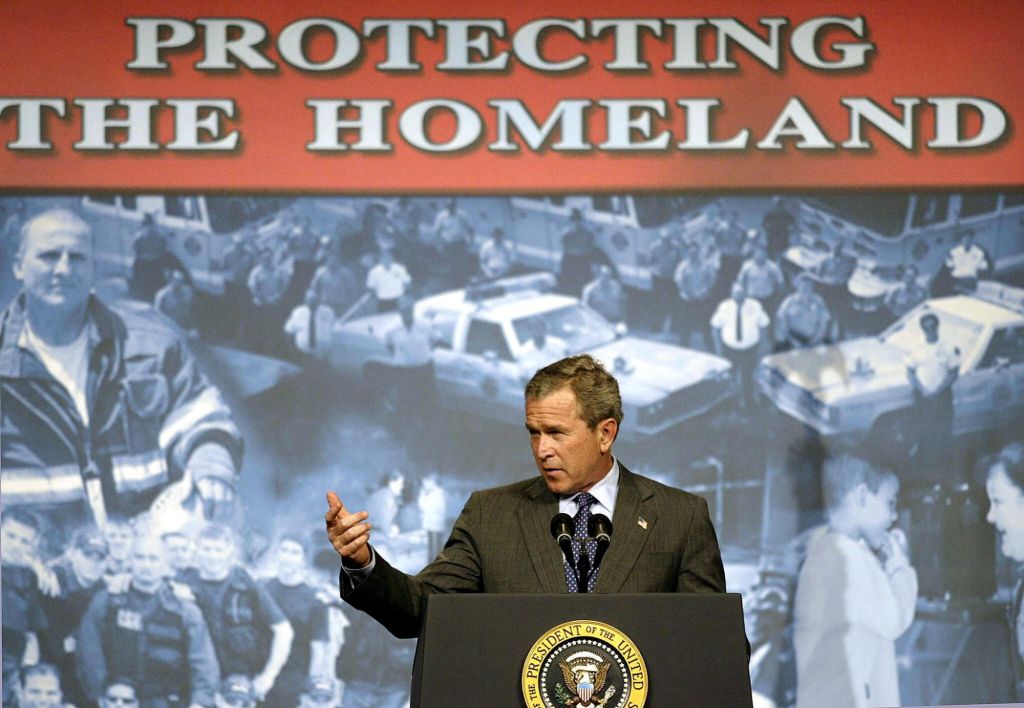
The United States spoke of freedom while building the Patriot Act after 9/11. The “war on terror” was the banner. Security was the excuse. Edward Snowden showed us where that road led: mass surveillance, backdoors into private data, phone calls stored, emails read. Whole populations treated as suspects.
Kumbirai Thierry Nhamo is an independent social justice activist and writer. He can be contacted on WhatsApp/Phone (+263780022343) or email kumbiraithierryn@gmail.com. You can read more of his articles on https://zealousthierry.art.blog/
Are you enjoying reading this post? Receive Notifications via email when new articles are published
Australia now borrows the same script. The stage has changed. The actors have changed. The language has changed. But the method is the same. Safety first. Liberty later.
To people in Zimbabwe, this should feel familiar. When the Private Voluntary Organisations Bill was tabled, it was sold as accountability. The idea was that charities and civic groups needed to be “transparent.” Who could argue against transparency? But once you cut through the language, it was about control. A government deciding who could receive funding, who could speak, who could even exist legally.
Then came the Patriotic Act. It sounded noble, even nationalistic. Who would want to be unpatriotic? But hidden under the name was the power to punish people for words, for meetings, for thoughts. Control wrapped in the flag.
Now look back to Australia. Age verification is the tool. Governments call it “age assurance.” That sounds harmless until you ask what it really means. Facial scans. ID uploads. Data about your behavior, your patterns, your habits. You cannot even join TikTok without proving who you are. In the process, everyone, not just children, is captured. Everyone must now hand over pieces of themselves to private companies that work with the state.
Once you hand it over, you cannot take it back. Your face, your ID, your digital fingerprints sit in systems that can be hacked, shared, or repurposed. Today they say it is to keep thirteen-year-olds off Snapchat. Tomorrow they say it is to keep dissenters off Twitter. The step from one to the other is small.
History is a witness. Every expansion of state power promises to be temporary. Rarely does it shrink. The US surveillance programs revealed by Snowden are still alive two decades later. Some states’ emergency powers during the liberation wars set precedents that governments kept long after the war ended. Once a door is open, the state never fully closes it.
The chilling part is how ordinary people often clap while it happens. Parents worry about cyberbullying, so they nod when Canberra says it will ban under-sixteens. Citizens worry about terrorism, so they accept the Patriot Act. Zimbabweans worry about corruption, so they allow the state to monitor NGOs. People accept because the threat is real. Yet they do not see that the cure is often worse than the disease.
And what comes next? Once age gates are in place, the logic of safety demands more. Why stop at sixteen? Why not restrict political speech “for national unity”? Why not limit encrypted messaging because criminals might use it? Why not demand digital IDs for every login? Once the machine starts, there is no finish line.
Already, trial reports in Australia show how flawed the technology is. Children are misclassified as adults. Adults are flagged as children. Bias creeps in depending on race, gender, or age. This is not just control. It is inaccurate control. Yet it is still being pushed into law. The price of failure will not be paid by the system but by the people locked out.
Zimbabwe has lived through smaller versions of this. SIM card registration tied every phone to a national ID. Bank transfers are tracked. Civic space shrinks each year. Now imagine that logic fused with Australia’s model. Imagine being unable to open a Facebook account without passing through a state-approved filter. Imagine being denied because your face scan failed. Imagine a government quietly keeping every failed scan in a database.
This is where the slope leads. Today it is kids. Tomorrow it is everyone. Every law of this kind is a rehearsal for the next law. Each piece adds to the machinery until freedom becomes a memory.
Are you enjoying reading this post? Receive Notifications via email when new articles are published
The irony is that children will still find ways in. VPNs, borrowed accounts, false IDs. They always have. Which means the ban does not even achieve its stated goal. It just builds a culture where the state becomes the gatekeeper of digital life. The child is not protected. The system is strengthened.
Governments love these moments because they can claim they acted boldly. They can claim they “saved” the young. They can claim they tamed the wild internet. Meanwhile, what they actually saved is their ability to watch and their ability to decide who belongs.
The rest of the world is watching Australia. Some will copy. Others will wait to see how far the system goes. In Zimbabwe, the conversation will shift. If Australia can police who enters social media, why can’t we? If Canberra can fine tech companies millions, why shouldn’t Harare? The precedent is global.
And once the precedent is set, citizens everywhere live under its shadow. You may not live in Australia, but the platforms you use do. They may roll out global changes to comply. Suddenly, even in Harare, you face a digital checkpoint. You must prove yourself before you can post a meme or read a friend’s update.
A digital dictatorship does not arrive with soldiers at the door. It arrives with sign-up forms, age checks, and promises of safety. It arrives with the language of care. By the time people see the bars, the prison has already been built.
Australia has taken a step that feels small, even reasonable, to those who believe the story of safety. But to those who know history, who have seen governments use crisis as opportunity, it feels like the beginning of something darker.
What comes next will not be decided in one law. It will come in waves. Restrictions on anonymity. Restrictions on speech. Restrictions on organization. Each justified by a noble cause. Each defended as necessary. Each leaving people less free than before.
Digital life is no longer a side activity. It is the bloodstream of society. To let governments seize control of its gates is to hand them the keys to everything. And once they have the keys, they rarely give them back.
Australia says this is about children. Zimbabwe says this is about NGOs. America said it was about terrorists. The pattern is the same. Control dressed as protection. The result is the same too: a society where freedom is chipped away until it exists only in memory.
The question is not whether this is about children. The question is whether we are willing to accept a future where every act online requires permission. A future where governments decide who is mature enough, loyal enough, safe enough to log in.
That is the shape of digital dictatorship. It does not declare itself. It creeps. It uses our fears as fuel. It sells us comfort while taking our freedom. And once it has enough, it will not need to ask anymore.
Kumbirai Thierry Nhamo is an independent social justice activist and writer. He can be contacted on WhatsApp/Phone (+263780022343) or email kumbiraithierryn@gmail.com. You can read more of his articles on https://zealousthierry.art.blog/
Did you enjoy reading this post? Receive Notifications via email when new articles are published
Latest Articles
- Building The United States’ Golden Dome Missile Defense System And How To Start A Space WarIn May 2025, the world got a first-hand look at what a modern missile defense system looks like during a major international conflict, when Israel attacked Iran and triggered a rapid retaliation. What most people saw was a piece of Israeli Missile Defense system referred to as the Iron Dome. But that name hides a more complicated reality. The Iron Dome is only the lowest …
- IshowSpeed coming to ZimbabweMarondera – Darren Jason Watkins Jr., the American internet personality better known as IShowSpeed, is expected to visit Zimbabwe as part of an ambitious tour spanning 20 African countries, a move that signals a growing shift in how global digital culture engages with the continent. Watkins, just 20 years old, has become one of the most influential livestreamers of his generation, commanding tens of millions …
- Us vs ThemThere’s no “us.” There’s no “them.” There’s only the comfort of pretending there is. People need enemies the way lungs need air. Conflict gives meaning to the meaningless.Without opposition, identity collapses. So we build one. We draw lines on maps, then forget who drew them. Every tribe begins as fear, then calls itself culture.We love belonging because it saves us from thinking.It’s easier to chant …
- We Turned Horniness Into An IndustryLet me explain this slowly, because if you blinked for five minutes in June, you might’ve missed the moment humanity officially gave up pretending it had standards. An actress, Sydney Sweeney, famous, attractive, very online-adjacent, partnered with a men’s grooming company called Dr Squatch to release a limited-edition bar of soap. Five thousand bars. Eight dollars each. And the marketing hook, the thing that made …
- Smoke ScreensThe Epstein Files were supposed to be a revelation.A ledger of the powerful written in ink, not whispers.Promises were made. Promises were repeated.They claimed the truth would come out.The fog would lift.Transparency was the campaign slogan. Then the files arrived.And almost everything was blank.Pages upon pages covered in black boxes.Names, conversations, details, gone.Block after block of censorship.Critics call it about 90 percent redacted. That is …

 Zealous Thierry