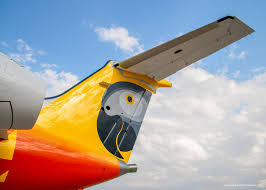

Earlier Fastjet announced an inaugural flight between Bulawayo and Victoria Falls — four flights a week. Their new Bulawayo–Victoria Falls service is a win. It takes a five-hour, pothole-ridden road trip and turns it into under an hour in the air.
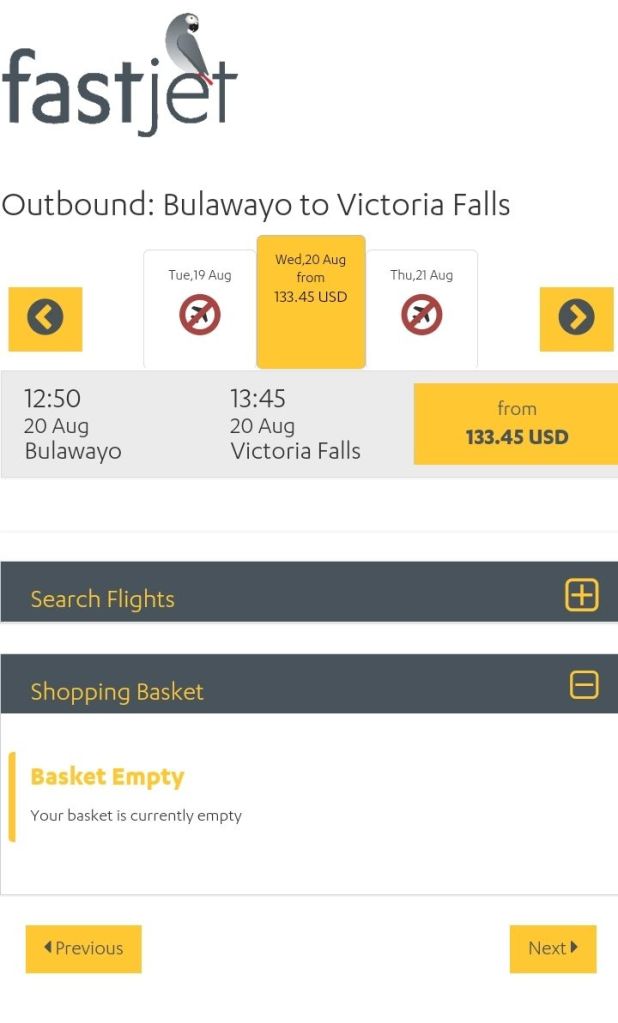
The air distance is about 364 kilometres, and a one-way ticket can be found for around USD 135.00, sometimes less on promotion. That should thrill us, but should also make us impatient.
Domestic flyers know the math too well. A Bulawayo–Harare hop, just about 360 kilometres, often costs over USD 125 one-way if booked late. Round trips can be USD 240 or more. Most of us go by bus because we cannot afford to fly.
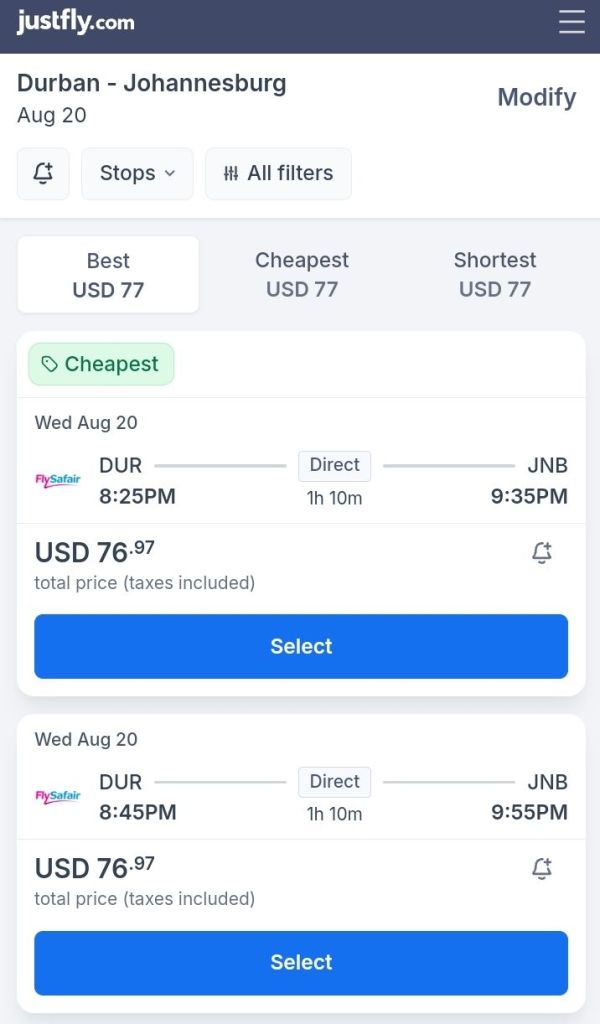
Now look south. Durban–Johannesburg takes more time in the air than Bulawayo–Harare, yet seats there often sell for under USD 80, even last-minute.
Johannesburg–Cape Town, more than triple the distance, can be cheaper per kilometre thanks to multiple airlines, frequent schedules, and a bigger market. South Africans fly farther for less money than we do here at home.
Part of the problem is structural. Fuel is costly. Airport charges are high. Maintenance, insurance, and a volatile currency raise the bill. Fewer passengers and fewer flights make it hard to spread fixed costs. Airlines here cannot scale like those in South Africa, so prices stay high.
Part of it is policy and management. Bad roads should make flying more attractive, yet airlines struggle because so few can afford the fares. Aviation fees and taxes, often used to plug budget gaps, keep costs high. Some airport charges are opaque. Every extra levy lands on the passenger’s ticket.
Fastjet’s move shows demand exists. It proves a city outside Harare can sustain flights that matter. But five flights a week is not a network (Fastjet has four flights while air Zimbabwe has one flight per week).
Frequent schedules across multiple routes drive competition and bring prices down. That takes more than one carrier. It takes an ecosystem of operators, airports, and regulators pulling in the same direction.
Flying here has also become ceremonial. Years of economic strain turned it into something for emergencies or an indulgence for the privileged few. The pool of potential travellers shrank, and airlines priced for that small group. It’s a loop that chokes demand and keeps fares high.
We need to change the fundamentals. Aviation should be treated as infrastructure, not a cash cow. Fees that punish airlines and passengers should be reviewed.
Targeted subsidies for key routes are not charity; they are investments. Many countries support strategic flights until markets stabilise.
Airports can help by cutting hidden charges and improving turnaround times. Every minute a plane sits idle costs money. Lower those costs and airlines can price more aggressively.
Regulators should make it easier for low-cost and regional carriers to enter the market without being buried in red tape.
Private players can share the load. Tour operators, hotels, and councils could bundle flights with packages to create predictable demand. Guaranteed seasonal seat blocks give airlines the confidence to add frequencies or lower fares.
The numbers tell the story. Bulawayo–Victoria Falls: 364 kilometres, USD 135 on a good day. Bulawayo–Harare: aboyt 360 kilometres, often over USD 125 one-way. Johannesburg–Durban: similar time in the air, often under USD 80, with sales dipping lower (during sales one may fly for as little as USD 25 on the DUR-JNB route). The difference is competition, frequency, and policy.
Some will argue the state should stay out of it. Yet roads and railways were built with public money. Strategic intervention in aviation works the same way: connect hubs, build demand, then step back.
The private sector alone will not move fast enough. Airlines need scale, and scale comes from cooperation between government, business, and carriers.
There’s a safety case too. The road between Bulawayo and Victoria Falls is long and dangerous in most parts. A safe, quick, affordable flight saves lives as well as time. That is reason enough to act.
Fastjet’s new route is proof that change is possible. But it will not be a revolution unless we push for more. More routes. More players. Transparent fees. Policies that see aviation as a public good. The next time a Bulawayo–Victoria Falls fare makes headlines, it should not be because it is rare, but because it has become normal. The sky above Zimbabwe should be a common road, not a luxury lane.
P.S. Independent writing survives on readers like you. If you can, please contribute here.
Latest Article
- Building The United States’ Golden Dome Missile Defense System And How To Start A Space WarIn May 2025, the world got a first-hand look at what a modern missile defense system looks like during a major international conflict, when Israel attacked Iran and triggered a rapid retaliation. What most people saw was a piece of Israeli Missile Defense system referred to as the Iron Dome. But that name hides a more complicated reality. The Iron Dome is only the lowest …
- IshowSpeed coming to ZimbabweMarondera – Darren Jason Watkins Jr., the American internet personality better known as IShowSpeed, is expected to visit Zimbabwe as part of an ambitious tour spanning 20 African countries, a move that signals a growing shift in how global digital culture engages with the continent. Watkins, just 20 years old, has become one of the most influential livestreamers of his generation, commanding tens of millions …
- Us vs ThemThere’s no “us.” There’s no “them.” There’s only the comfort of pretending there is. People need enemies the way lungs need air. Conflict gives meaning to the meaningless.Without opposition, identity collapses. So we build one. We draw lines on maps, then forget who drew them. Every tribe begins as fear, then calls itself culture.We love belonging because it saves us from thinking.It’s easier to chant …
- We Turned Horniness Into An IndustryLet me explain this slowly, because if you blinked for five minutes in June, you might’ve missed the moment humanity officially gave up pretending it had standards. An actress, Sydney Sweeney, famous, attractive, very online-adjacent, partnered with a men’s grooming company called Dr Squatch to release a limited-edition bar of soap. Five thousand bars. Eight dollars each. And the marketing hook, the thing that made …
- Smoke ScreensThe Epstein Files were supposed to be a revelation.A ledger of the powerful written in ink, not whispers.Promises were made. Promises were repeated.They claimed the truth would come out.The fog would lift.Transparency was the campaign slogan. Then the files arrived.And almost everything was blank.Pages upon pages covered in black boxes.Names, conversations, details, gone.Block after block of censorship.Critics call it about 90 percent redacted. That is …

 Zealous Thierry