It is a strange thing, isn’t it — to wake up each day and realize that breathing, eating, and simply existing have become labors more brutal than the work we were taught to dream of? There was a time, or so they told us, when work was about building a life, stacking one brick of hope upon another, until you could look back and say you had truly lived. Now, survival itself has been twisted into a full-time job, stripped of dignity, stripped of meaning, stripped of the simple promise that if you worked hard, you would be okay.
It did not happen all at once. Like water boiling around a frog, it crept up quietly — the rising cost of food, the stagnant wages, the casual way governments shrugged off the poor, the way corporations squeezed another dollar from the desperate. Piece by piece, the machine tightened its grip around our throats. Until one day we found ourselves gasping, working two jobs, three gigs, still unable to afford rent, still choosing between electricity and groceries, still apologizing to our children when their shoes wore out and there was no money for new ones.
When did it become normal to spend your entire life just trying not to sink?
![United Nations Secretary-General Antonio Guterres speaks at the UN General Assembly to present priorities for 2024 at UN headquarters in New York City, the US [Kena Betancur/AFP] On Zealous Thierry by Kumbirai Thierry Nhamo](https://zealousthierry.art.blog/wp-content/uploads/2025/04/afp__20240207__34hv98t__v1__highres__undiplomacyconflictguterres-17073230942997497535485026944.jpg?w=770)
António Guterres, the Secretary-General of the United Nations, had to admit last year that we are “living through an age of chaos,” where “inequality has reached obscene levels” and “global systems have utterly failed ordinary people.” He said it during the UN General Assembly to present priorities for 2024 at UN headquarters in New York City, while billionaires who had arrived on the sidelines of the Assembly sipped champagne and nodded solemnly, as if they, too, were victims of the very injustice they built. Meanwhile, in the real world, 60% of people globally reported in 2024 that they are now “living paycheck to paycheck” — not in luxury, not in laziness, but in permanent anxiety, running like hamsters on a wheel that never stops.
You see it here at home. You see it everywhere. In Zimbabwe, survival is no longer a struggle — it is a science, a ritual, an identity. A loaf of bread costs a $1 now. Not $1 in theoretical economic models. Real, hard American dollars — the currency of dreams and desperation. And yet the average Zimbabwean monthly income barely scrapes $150. Do the arithmetic: five loaves of bread a week, twenty a month, and already $20 is gone. Before school fees, before rent, before electricity tokens, before a single paracetamol tablet for the next fever that nobody can afford to diagnose properly.
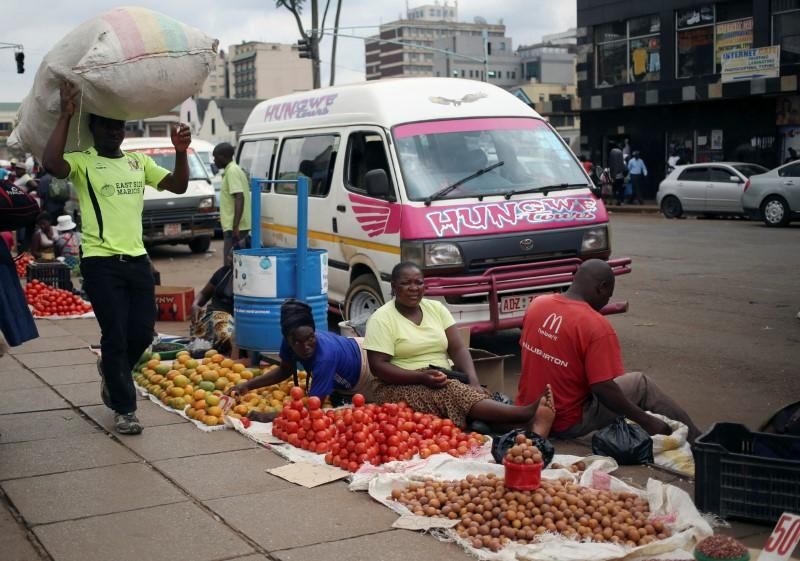
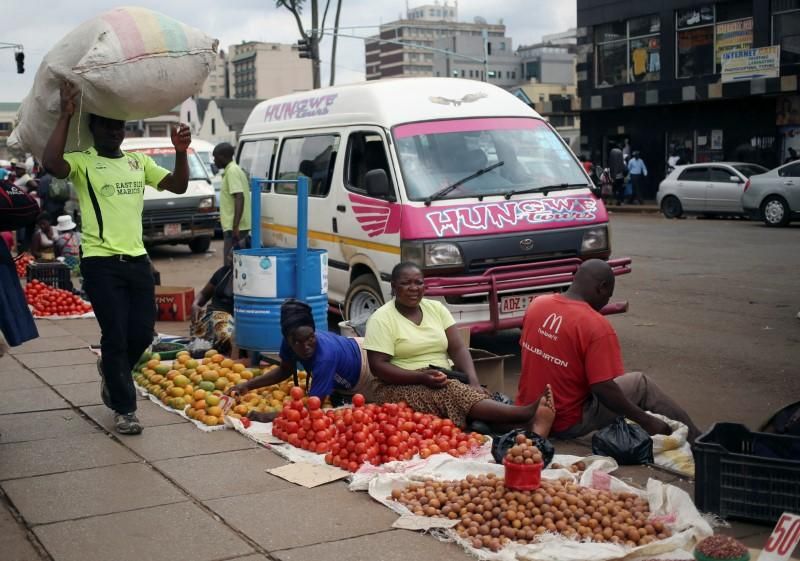
The streets of Harare throb with this unspoken calculation. Vendors line the pavements, selling tomatoes by the single unit, airtime scratch cards by the dollar, cabbages sliced in half because a whole one is a luxury item now. The mathematics of the poor is brutal — how to split a dollar into tomorrow and the day after, how to stretch $5 across a week.
Once upon a time, survival was supposed to be a phase. A temporary setback. An interlude before “better days.” Now it is a career. A lifetime appointment to a job nobody applied for. When a country normalizes survival as the highest possible aspiration for the majority, it has declared its people redundant to the future.
When bread costs $1 and wages remain trapped in an economic graveyard, you are not just being underpaid — you are being erased. Your labor, your hope, your humanity are being valued at less than the price of breathing. And still, the speeches drone on about “patriotism,” about “resilience,” as if surviving a collapsing economy is an act of national pride rather than an open wound. Diesel skyrockets, and bus fares double, and the government releases yet another statement blaming “external factors,” as if hunger had a passport and could be deported. You see the vendors lining the streets, their backs bent, selling tomatoes, secondhand shoes, anything — not because they are lazy or uneducated, but because formal employment is a ghost story, and survival demands entrepreneurship even where there is no market left to sell to.

It is the same in America, where in 2025, a Pew Research Center report showed that 56% of adults could not cover an unexpected $1000 emergency without borrowing money. The so-called Land of Opportunity is now a land where missing one paycheck can mean eviction. Where working full-time at minimum wage cannot afford you a one-bedroom apartment in any state. Where “hustle culture” is glorified not because it is noble, but because there is no other way to survive.
In Nigeria, a 2024 Afrobarometer survey revealed that over 51% of youths are considering emigration because they no longer believe they can live a decent life at home. Not thrive — simply live. They are not running toward dreams; they are fleeing a nightmare that demands their sweat and their soul, yet offers no reward except exhaustion.
And all the while, politicians tell us the economy is growing. They quote GDP numbers like priests reciting scripture. They tell us unemployment has dropped — never mind that people are now driving taxis, selling airtime, washing clothes, anything at all, just to put a day’s dinner on the table. They measure success in numbers while we measure it in skipped meals, in sleepless nights, in hollow prayers muttered over empty pockets.
Since when did life become a war for crumbs?
Last year, Oxfam released a brutal report during the 2024 Davos summit, stating that “a billionaire is created every 30 hours, while a million people fall into poverty every 33 hours.” Thirty hours to ascend to unthinkable wealth. Thirty-three hours to descend into despair. That is not an accident. That is not an unfortunate coincidence. That is policy. That is the global economy doing exactly what it was designed to do — siphon life upwards, drain survival downwards.
Closer to home, a teacher in Masvingo went viral in January 2025 for posting her payslip on Facebook: a take-home salary equivalent to $110. After 15 years of service, after molding future doctors, lawyers, and leaders, she could not even afford rent without selling vegetables on weekends. Some people laughed. Some said she should “find a side hustle.” But no one asked the deeper question: Why have we accepted a world where a side hustle is a condition for survival, not a personal choice?
There is a deep violence in forcing people to work endlessly without reward. It is not just physical exhaustion — it is the theft of dreams, the slow death of hope. It is watching your life shrink from possibility to panic. It is knowing you can never afford to get sick, never afford to rest, never afford to stop paddling even for a moment — because the second you do, you will sink, and nobody will throw you a rope.
It is easy to blame individuals. The lazy. The entitled. The ungrateful. Politicians and pundits love these words because they erase responsibility. But the truth is harder. The truth is that the system is built to extract from the many to enrich the few. The truth is that survival has become a full-time job because those at the top need it to be. Fearful workers are cheap workers. Exhausted citizens are obedient citizens. People too busy chasing rent and food are people too tired to organize, to protest, to imagine something better.
Even Pope Francis, not exactly a radical figure, warned at the start of 2025 that “an economy without solidarity, without justice, without mercy, is a dead economy, and it kills.” He was speaking about global hunger, but he could have been speaking about every industry, every country, every neighborhood where the poor are squeezed harder each day, and then blamed for bleeding.
And yet, somehow, the myth persists: that if you are struggling, it must be your fault. That if you are tired, broke, anxious, terrified of the next bill, it is because you didn’t work hard enough. Never mind that no generation in history has worked harder for less. Never mind that productivity has soared while wages have flatlined. Never mind that a tiny handful of people — fewer than 1% — now own more wealth than the bottom half of the planet combined. Still, they tell you it’s personal failure. Still, they tell you to grind harder, smile wider, thank the system for your scraps.
Since when did working yourself into the grave become the dream?
A friend of mine in Bulawayo, a trained nurse, now sells secondhand clothes in the flea market. She wakes at 4 AM, travels two hours by kombi to buy stock, stands in the sun all day hawking skirts and blouses, comes home, cooks, cleans, cares for her aging parents — and collapses into bed by midnight, only to repeat it all again. She is 24 years old, and already her body aches like someone twice her age. She jokes that rest is “a luxury for the rich.” But there is no humor in her eyes when she says it.
In South Africa, the 2025 unemployment statistics reached an all-time high among youth, with over 61% of those under 35 unable to find formal work. Entire generations are growing up believing that permanent hustle is normal, that not knowing what tomorrow will bring is just how life is supposed to be. That normalizing exhaustion, anxiety, and precarity is somehow a virtue.
And governments? They offer slogans. “Resilience.” “Self-reliance.” As if poverty were an adventure sport. As if endless struggle were noble, and not the result of decades of failure, corruption, and cruelty.
There is a sickness in this world — a sickness deeper than economics. It is a moral sickness. A system that treats human beings as disposable labor units, worthy only insofar as they can produce profit. A system that gaslights its victims into believing their suffering is their own fault.
Since when did surviving become a badge of honor?
There is no shame in working hard. There is no shame in striving. But there is deep shame — deep moral rot — in a world where hard work is met not with dignity, but with barely scraping by. Where a nurse, a teacher, a street vendor, a delivery driver, must give every last drop of their strength just to stay above water.
Survival should never have been a full-time job. Living should not be a luxury. Dignity should not be a prize won only by the luckiest or the most ruthless.
We deserve more.
We always did.
And if those in power will not build a world where ordinary people can live — not just survive, but truly live — then it falls to us to demand it. To fight for it. To refuse to accept that exhaustion and fear are the price of being alive.
Because if we don’t, then survival will remain a full-time job — and the life we were promised will remain nothing more than a cruel, unreachable dream.

 Zealous Thierry
That is a deep message . One of the important argument you advanced in that an exhausted citizenry is obedient and that citizens who chase basics of life daily cannot think beyond that . I would add such society cannot innovate ,it can one day completely fail to produce goods for itself. Zimbabwe survive on imports and we are a very obedient lot.
LikeLiked by 1 person